
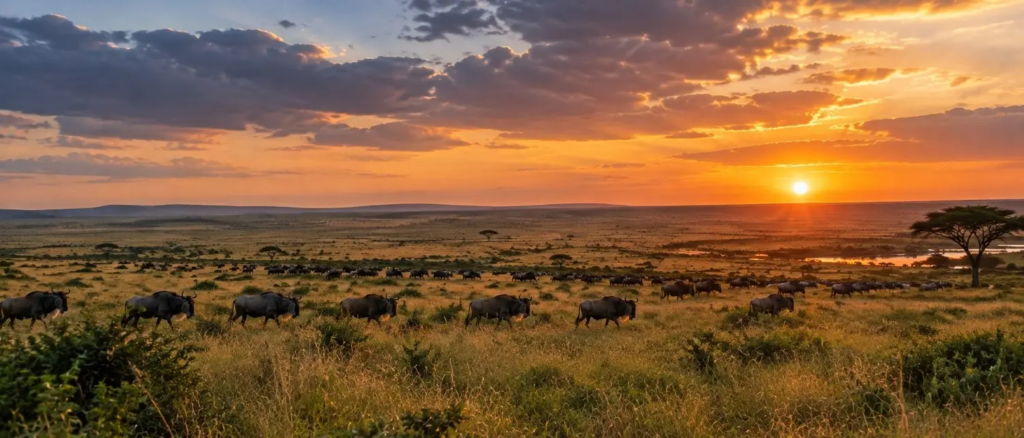
Let’s be honest: when a viral video shows fifty safari vehicles gridlocked around a single, stressed-out cheetah, it is easy to wonder whether the Maasai Mara has lost its soul. Is it still a magical, untamed wilderness, or has the Maasai Mara National Reserve become an overpriced, overcrowded tourist circus
The truth? The magic is still there, but it survives thanks to a fierce, mostly invisible tug-of-war. On one side sit real threats: mushrooming hotel development, gridlocked traffic tracks, severe climate droughts, and opportunistic bushmeat poachers who move in when times get hard. On the other side stands a two-pronged counterattack led by the Narok County Government and a growing network of indigenous Maasai-led wildlife conservancies bordering the reserve.
Together, they have stopped playing nice — and they are quietly rewriting the rules of the modern Maasai Mara safari.
Part 1: The Government Cracks the Whip
Guided by the strict Maasai Mara National Reserve Management Plan, Narok County is using its regulatory power to forcefully push back against the chaos:
- Declaring War on Traffic Jams: Certain heavily congested zones and driving tracks are now strictly closed to vehicles. These areas are put on mandatory “rest rotations” to let the grass rejuvenate and give wildlife a quiet space to breed and recover.
- Banning the “Amateur” Vehicles: You can no longer drive any standard personal saloon car into the reserve. Only registered, heavy-duty 4WD professional safari vehicles are allowed entry for Maasai Mara game drives, dramatically cutting down on traffic chaos.
- The Multi-Million Shilling Patrol Overhaul: The county has funded a major infrastructure facelift, building new, remote ranger stations. This allows anti-poaching units to rapidly deploy to remote corners when hunters try to sneak past the borders during devastating droughts.
- Putting Money Where the Wildlife Is: Under the Narok County Wildlife Conservancies Act, the county legally locks away at least 2 percent of its audited revenue directly into a Wildlife Conservancies Fund, financing community-led patrols and supporting families affected by human-wildlife conflict.
- Expanding the Boundaries: Rather than letting the park shrink under human settlement, the county approved the Maasai Mara Game Reserve Expansion Bill, legally widening the reserve’s borders so wildlife has more room to roam safely.
- The Crackdown at the Gates: In tight partnership with the Kenya Wildlife Service (KWS), rangers run aggressive, zero-tolerance checks at the main gates. Unlicensed tour operators or anyone caught breaking the rules face immediate licence cancellation and heavy fines.
Part 2: The Secret Weapon — The Community Buffer Zone
While the government handles the main reserve, the real magic happens right on its borders. Across 24 community-led wildlife conservancies, the Maasai Mara Wildlife Conservancies Association (MMWCA) has formed a massive 165,000-hectare buffer zone.
These are private tracts of land owned by indigenous Maasai families who have voluntarily pooled their properties to protect the wild — the same rangers and landowners profiled in our feature on the Maasai guardians of Mara conservation. Here is how they are changing the game:
- Strict Caps on Crowds: To eliminate toxic tourist traffic, conservancies enforce strict limits on bed capacity and visitor numbers. Only a handful of small, eco-friendly luxury camps are permitted, so you will never see dozens of vans crowded around a single lion.
- Guaranteed Income for Families: Conservancies directly combat poverty, the primary driver of poaching, by paying guaranteed monthly land-lease fees to over 3,000 Maasai landowners, turning local families into direct business partners regardless of tourism highs and lows.
- Community Ranger Units: Instead of relying only on government wardens, conservancies recruit, train, and employ local Maasai youth as professional rangers who run daily anti-poaching patrols armed with ancestral knowledge and modern equipment.
- The “Simba Scouts” and Predator Tracking: Specialist groups like the Maasai-led Simba Scouts actively track and monitor lion prides, cheetahs, and leopards, acting as an early-warning system that protects carnivores from human conflict.
- Tearing Down Fences for Migration: Rapid human settlement means fences are destroying ancient wildlife paths. Conservancies convince landowners to legally halt land subdivision and remove physical fences, keeping vital migration corridors open for millions of wildebeest, zebra, and elephants during the Great Migration.
- Smart Grazing Schedules: Livestock is the lifeblood of the Maasai, but overgrazing destroys the ecosystem. Conservancies run strict rotational grazing programmes, mapping specific areas where cattle can feed safely without depleting wildlife grasslands.
- Financing Peace With Predation: Through community funds like the “Wildlife Pays” initiative, conservancies financially compensate herders when a predator attacks their livestock — stopping retaliatory spearings and poisonings and building true coexistence.
The Final Verdict: Is the Magic Still Alive?
Ultimately, the Maasai Mara is neither pure hype nor an untouched paradise. It is a living, breathing ecosystem caught in a constant balancing act between massive global popularity and intense local conservation. If you visit expecting a private, completely isolated wilderness without another vehicle in sight, you will likely be disappointed by the main reserve during peak Great Migration season.
However, once you understand the scale of the operation running behind the scenes, your perspective changes completely. The high daily conservancy fees and strict rules are not tourist traps — they are the active shields protecting one of the greatest natural wonders on Earth.
The Future of the Wild
The true success of the Mara does not come down to choosing between tourism and nature — it comes down to integration. By combining strict government regulation with profitable, community-led conservancies, the Mara has created a blueprint for the future of African conservation.
When you pay your entry and conservancy fees, you are directly paying the salaries of Maasai rangers, leasing land to protect ancient migratory paths, and funding the defence of wildlife against climate crises and poachers. The magic of a Maasai Mara safari is still deeply authentic, but it is no longer a passive miracle. It is a hard-fought victory, sustained every day by the people who call it home.
See It for Yourself
If this delicate balance between wild and protected has you curious to witness it in person, Mtito Safari Camp places you right at the heart of the story — a Gold Eco-rated luxury camp nestled between the Naboisho and Nashulai conservancies, where every stay directly supports the rangers, landowners, and wildlife described above.
Explore the 3 Days, 2 Nights Masai Mara Safari or the 4 Days, 3 Nights Masai Mara Safari package, or get in touch with the reservations team to plan a Masai Mara Kenya safari that gives back as much as it gives you.
