
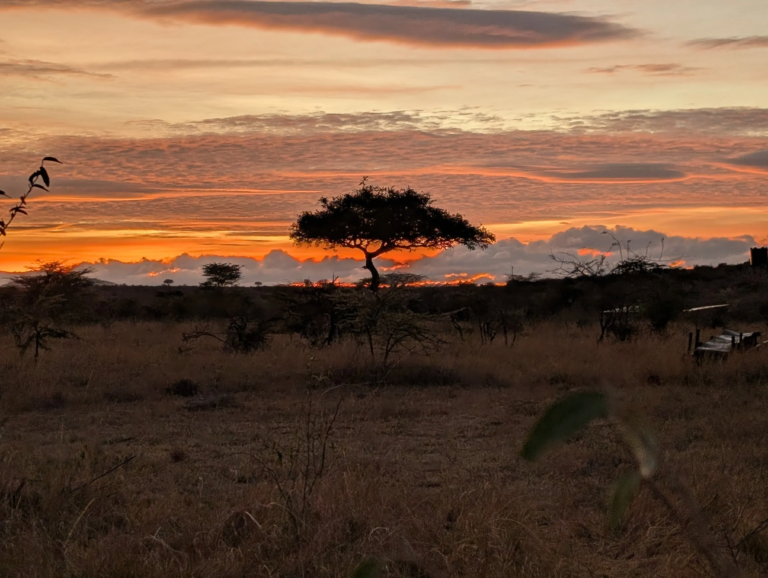
In the heart of the Maasai Mara, where the sun commands the plains and the horizon stretches endlessly, life does not merely exist; it endures. Survival here demands an unbreakable spirit, deep roots and an adaptable nature. Few living things embody that rugged elegance better than the balanite tree (Balanites aegyptiaca ), commonly known as the desert date and called Oing’oswa in the Maa language. It stands as a silent sentinel across Africa’s drylands.
When it came time to choose a symbol for Mtito, we did not look to the swift cheetah or the roaring lion. We looked instead to the soil, the shade and the branches of the balanite. This is the story of the tree that defines our landscape, anchors our ecosystem and serves as the literal and metaphorical logo of everything we stand for.
The truth? The magic is still there, but it survives thanks to a fierce, mostly invisible tug-of-war. On one side sit real threats: mushrooming hotel development, gridlocked traffic tracks, severe climate droughts, and opportunistic bushmeat poachers who move in when times get hard. On the other side stands a two-pronged counterattack led by the Narok County Government and a growing network of indigenous Maasai-led wildlife conservancies bordering the reserve.
Together, they have stopped playing nice — and they are quietly rewriting the rules of the modern Maasai Mara safari.
A Common Tree With an Uncommon Spirit
The balanite is anything but rare. It is widely distributed across the dry tropical belts of Africa, from Senegal in the west to Kenya in the east and down to Zimbabwe, and it also grows in parts of the Middle East and South Asia. In many arid savannahs, along valley floors and on riverbanks, it is one of the dominant, defining trees of the landscape.
What makes it remarkable is not scarcity but staying power. In the East African savannah, the balanite establishes itself where other trees falter, holding its ground along riverbanks, valley floors and open grasslands. It remains a permanent fixture through torrential rains and punishing droughts alike.
What Kind of Tree Is the Balanite?
The balanite is a hardy, medium-sized evergreen that grows up to 10 metres tall. It is instantly recognisable by its dark, deeply fissured, fire-resistant bark and a tangled canopy of bright green branches armed with long, woody spines.
Its leaves are just as distinctive. Each is made up of two leathery leaflets that look like a pair of green wings, a clever design that helps the tree minimize water loss under the fierce Mara sun.
The Tree of Life: Why Communities Revere the Balanite
For centuries, indigenous communities across Africa have honored the balanite as a “totem tree” or “tree of life”, because almost every part of it yields something of value.
An environmental shield
The balanite is a vital ally against desertification. Its extensive root system binds fragile topsoil and helps prevent erosion, while its wide canopy offers a rare, life-saving oasis of shade in scorched landscapes.
Nourishment in lean seasons
When crops fail during severe droughts, the fruit of the balanite helps sustain human life. The bittersweet, date-like fruits are rich in nutrients. The soft inner bark can be used to make soap, and the seeds inside produce a highly valued, clear oil used for cooking.
A natural pharmacy
Traditional healers rely heavily on the tree. Infusions made from its leaves, bark and roots are used to treat ailments ranging from malaria to intestinal complaints. The crushed fruit even plays a role in community health: when added to water bodies, it is used as a natural control against the snails that carry bilharzia.
A Refuge for Wildlife
To walk past a balanite is to witness a bustling ecosystem in miniature. Because its branches are guarded by formidable thorns, a wide variety of birds, including vultures and weavers, choose the deep interior of the tree to build nests safe from predators.
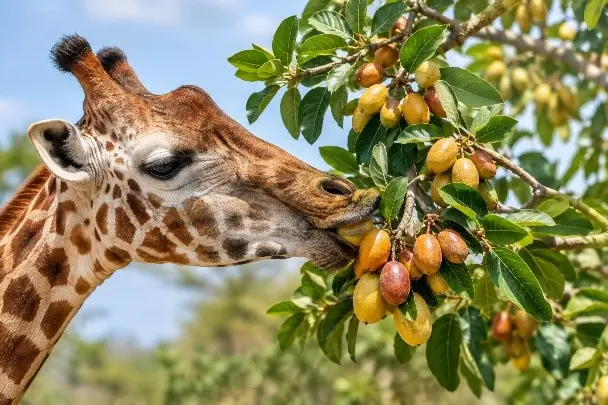
On the ground, the tree is a favourite dining spot for the Mara’s heavyweights. Elephants, giraffes, gazelles and antelopes all feast on its nutrient-rich leaves and fallen fruit. In return, these animals play a critical part in the tree’s survival. By eating the fruit and dispersing the hard seed stones across the plains in their dung, wildlife becomes the balanite’s natural planting team.
Why the Balanite Is the Face of Mtito
A company logo should be more than a pretty design. It should be a statement of intent, history and values. We chose the balanite as the Mtito emblem for three reasons.
1. Unyielding resilience
The balanite thrives in the harshest environments. It braves intense droughts, wild bushfires and seasonal flooding without losing its green canopy. That is the spirit we aim to bring to everything we do: standing strong, adapting to challenges and remaining dependable no matter the climate.
2. Deep roots and grounded stability
The tree has a dual root system: a deep central taproot that plunges towards hidden underground aquifers, and a wide web of lateral roots spread across the surface. It mirrors our business philosophy. We are firmly grounded in our local community and connected to our heritage, yet stable enough to support wide-reaching growth.
3. A generous pillar of support
Just as the balanite gives its shade, food and medicine freely to the savannah, Mtito aims to be a multi-purpose pillar of support , nourishment and shelter for our guests, our team and our community
Rejuvenating the Mara: How We Protect the Balanite
Despite its resilience, the balanite faces modern pressures. Livestock heavily browse young seedlings and people gather the fruit, so natural regeneration can be slow, and young trees rarely reach adulthood without help. At Mtito, we are actively working to rejuvenate this iconic species through two approaches.
Fenced seedling sanctuaries
We create small, protected enclosures, known as exclusion zones, that keep grazing cattle and wildlife away from young wild saplings until they are tall and strong enough to survive on their own.
Direct seed propagation
We process seeds sourced from the wild, often collecting those that have naturally passed through livestock, since this helps break the seed’s tough outer dormancy. These seeds are then nurtured in our protected nursery before being transplanted.
Your Role: From Observer to Protector
True conservation is a shared journey. When you stay with us at Mtito, you step out of the role of passive observer and become an active protector of this landscape.
Through our guest conservation initiative , you are invited to visit our tree nursery and learn about dryland ecology from our local guides. The experience culminates in a planting ritual. We plant a variety of fast-growing indigenous trees to restore the canopy, and select guests are given the special honor of planting a young balanite sapling of their own.
A Legacy for the Next Century
The balanite plays the long game. It is a slow-growing tree that teaches patience. It takes about three years just to reach a few metres in height, and five to eight years before it produces its first flowers and fruit. To see a balanite reach its full architectural maturity takes between 15 and 25 years.
That is what makes planting one so meaningful. You are not planting for today, or even for this decade. Fully mature balanite trees can live comfortably for 100 years or more. Decades from now, the sapling you place in the soil will still be standing, offering shade to a resting giraffe, a home to a nesting bird and life to the Maasai Mara.
Join the Circle of Life
At Mtito, our logo is not just a mark on a page. It is a promise rooted deeply in the soil of the Maasai Mara. Every time we look at the branches of the balanite, we are reminded that true strength is quiet, true resilience is patient and true luxury lies in harmony with nature.
When you stand beneath the shade of an ancient Oing’oswa, you stand beneath a century of history. And when you plant one with us, you write your own name into the future of this wild, magnificent landscape.
We invite you to step off the safari vehicle, press your hands into the earth and plant a legacy that will outlive us all. Come to Mtito, find your roots and help us guard the soul of the savannah.
Book your journey today , and leave behind a living testament to your time in the Mara.
