
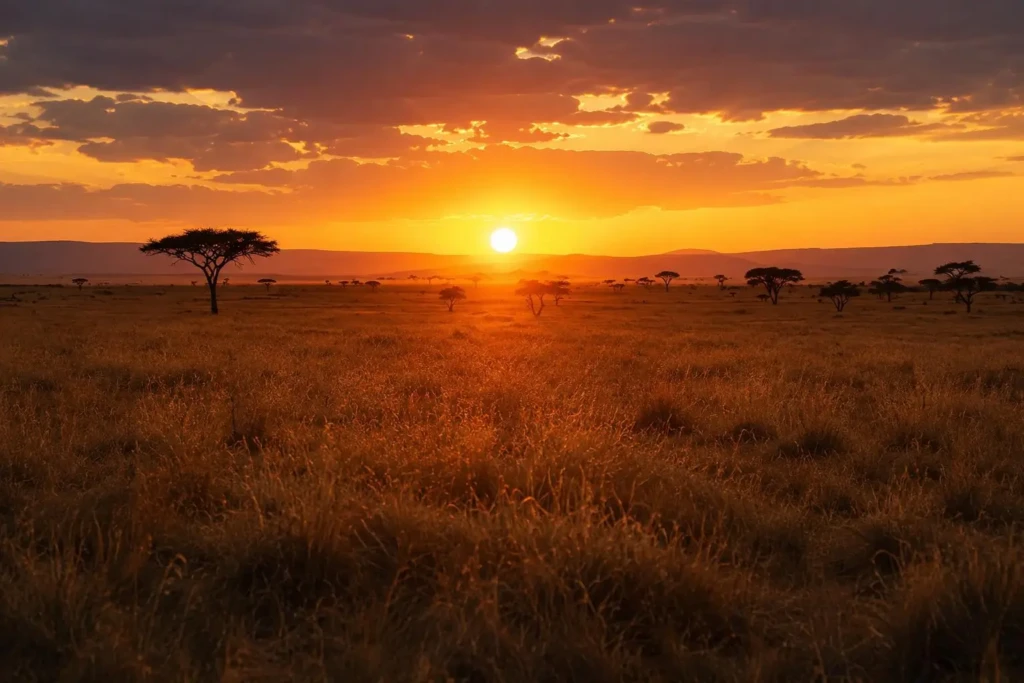
Few places on Earth carry the weight of expectation that the Masai Mara does. It is the destination people dream about for years before they finally book the flight — and it rarely disappoints. But it is also a place that raises a lot of questions, especially for first-time visitors. How do you get there? What does it cost? Is it safe? When should you go? We’ve pulled together the questions we get asked most often and answered them in one place, so you can plan your trip with confidence.
Masai Mara 101: What It Is and Why It’s Famous
What does “Maasai” mean, and why are the Maasai famous?
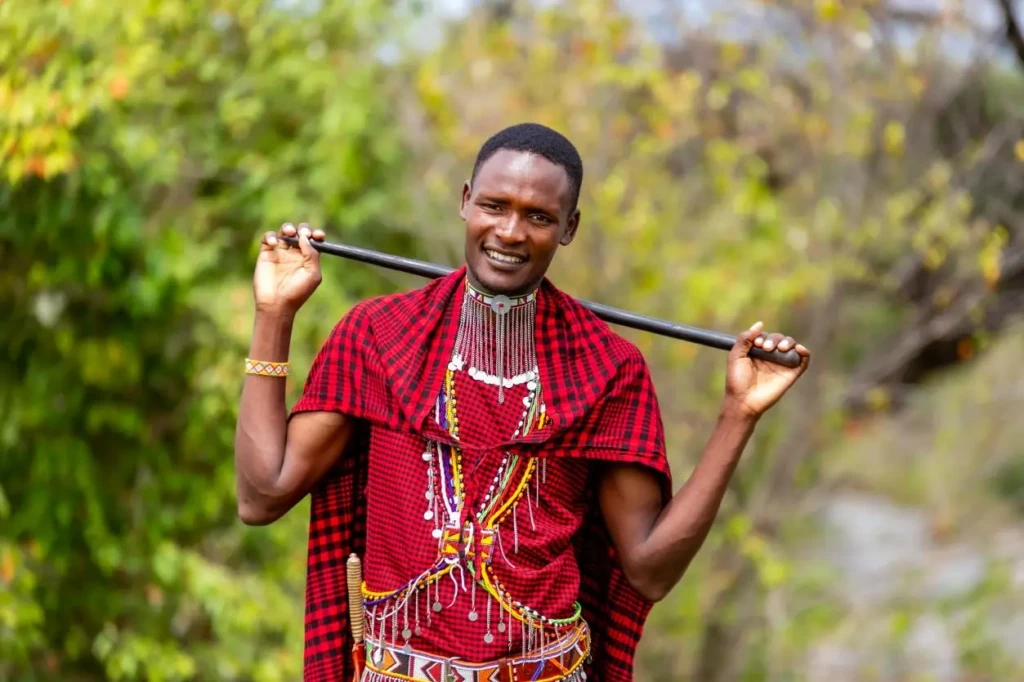
The name “Maasai” comes from “Maa,” the language spoken by the Maasai people — it means “speakers of Maa.” The Maasai are one of Africa’s most recognisable ethnic groups, known for their tall, striking presence, vivid red shúkà (cloth wraps), intricate beadwork, and a semi-nomadic pastoral lifestyle built around cattle herding. They have lived alongside the wildlife of southern Kenya and northern Tanzania for centuries, and the Masai Mara reserve is named after them — “Mara” means “spotted” in the Maa language, describing how the landscape looks from a distance, dotted with trees, clouds, and wildlife.
Maasai culture and traditions, in brief
Maasai society is organised around age-sets, with young men (moran, or warriors) traditionally responsible for protecting cattle and the community. Cattle are central to Maasai life, representing wealth and status and remaining deeply woven into ceremonies and the daily diet. Traditional homes (manyattas) are built from mud, sticks, and cow dung, arranged in a circle for protection. Beadwork, the adumu jumping dance, and oral storytelling remain a strong part of Maasai identity today, even as many Maasai now also work in tourism, conservation, and education.
What is the Masai Mara famous for?
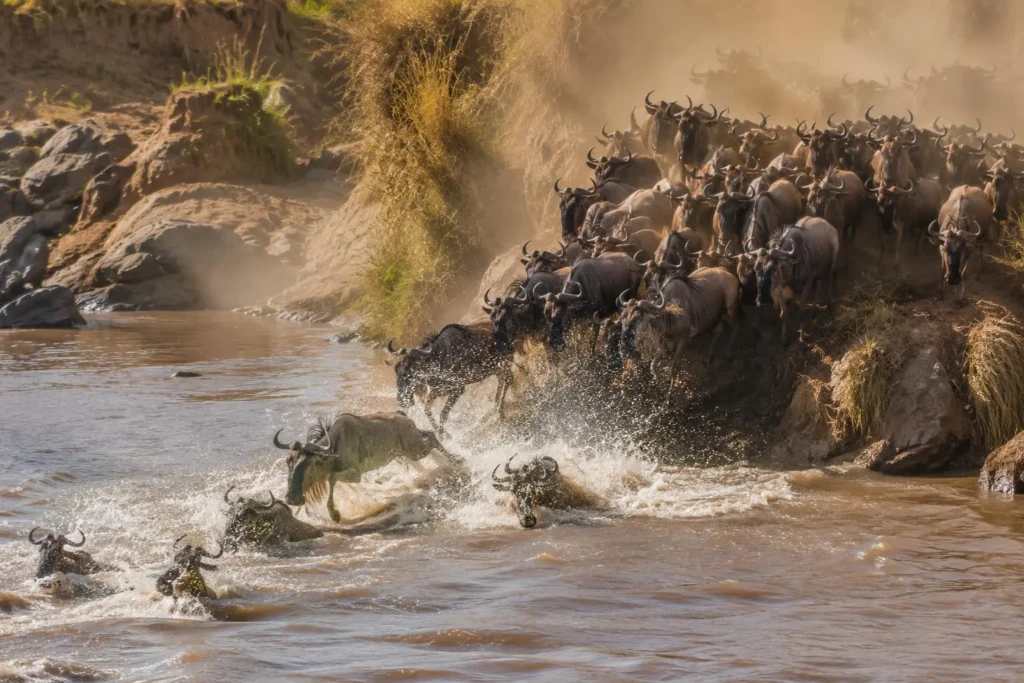
The Masai Mara is famous for three things above all: the Great Migration (over a million wildebeest, zebra, and gazelle crossing the Mara River), an exceptionally high density of predators including lion, leopard, and cheetah, and the Big Five. It is also renowned for its Maasai cultural heritage, its rolling golden savannah, and increasingly for camps like Mtito Safari Camp that combine that wildness with genuine comfort and sustainability.
Where Is the Masai Mara, and How Do You Get There?
Is the Masai Mara in Kenya or Tanzania?
The Masai Mara National Reserve is in Kenya, in the southwest of the country, bordering Narok County. It is the northern extension of the same ecosystem as the Serengeti National Park in Tanzania; the two are connected by open plains with no fence between them, which is exactly what makes the wildebeest migration between them possible.
How do you get to the Masai Mara from Nairobi?
There are two options. By road, it’s roughly 225–280 km from Nairobi depending on which gate you use, and takes about 5–6 hours, passing through Narok town and the dramatic Great Rift Valley escarpment viewpoint. By air, scheduled light-aircraft flights leave from Nairobi’s Wilson Airport and take around 45 minutes to an hour, landing at one of several airstrips inside or near the reserve. Driving is the better choice if you want to see more of Kenya’s countryside and keep costs down for a group; flying suits travellers short on time or looking for maximum comfort.
Where to Stay in the Masai Mara
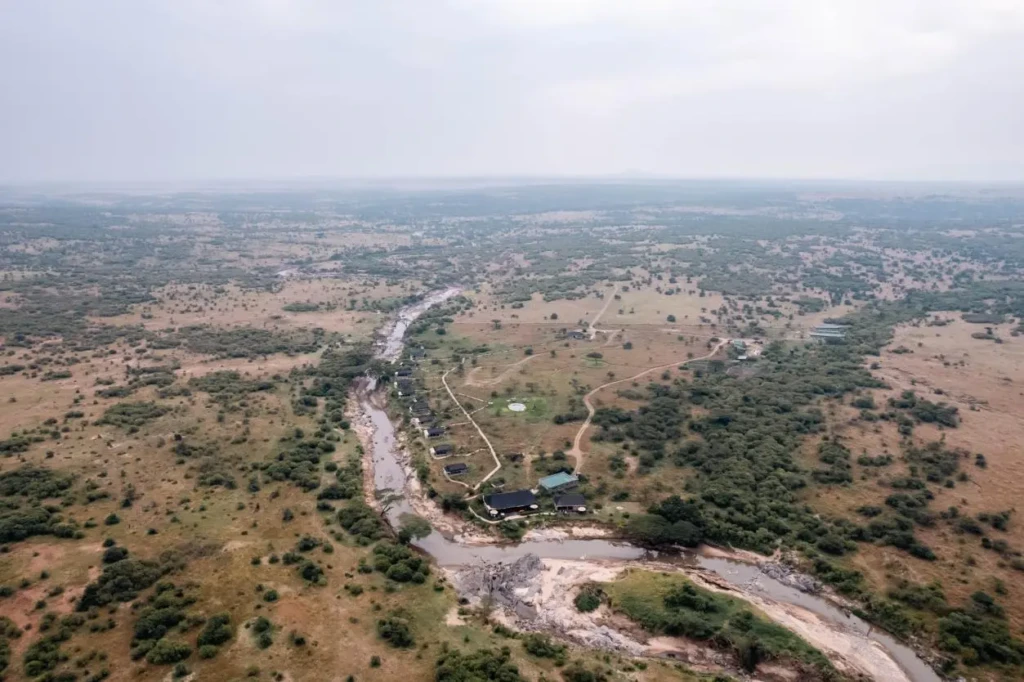
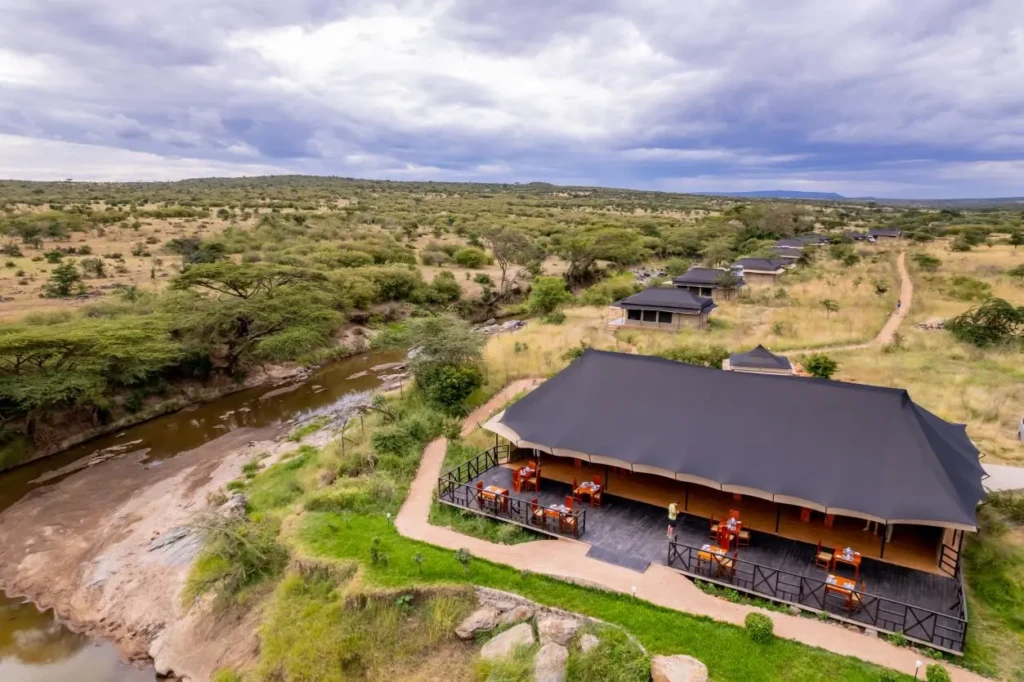
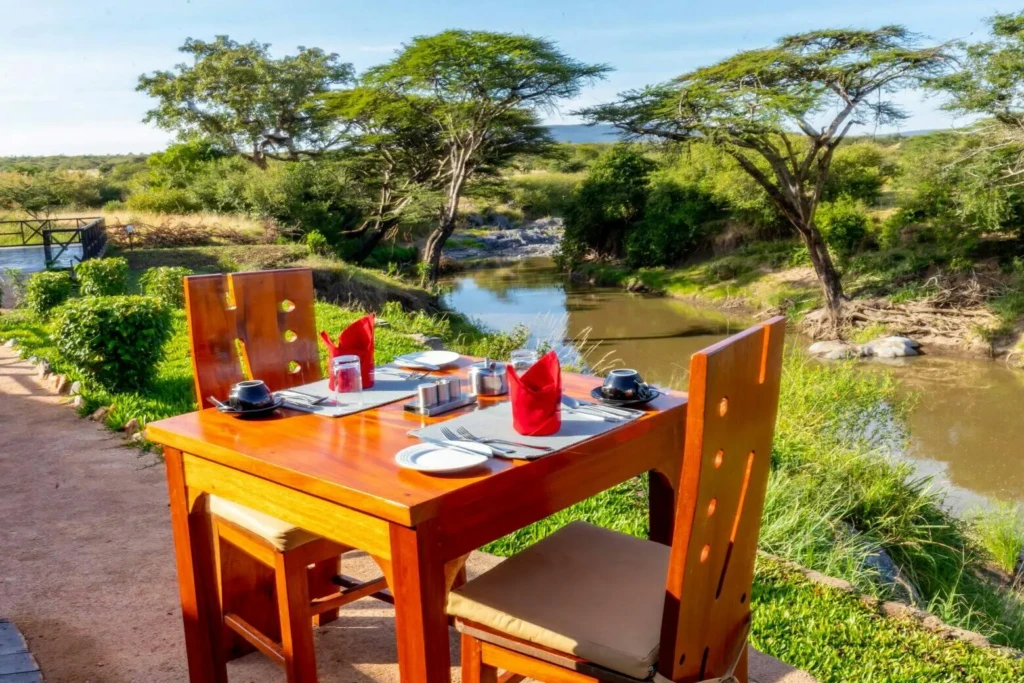
Options range from budget camps to luxury safari lodges offering game drives, meals, and comfortable accommodation. Mtito Safari Camp is a Gold Eco-rated camp of just ten luxury tents set along the Talek River, between the Naboisho and Nashulai conservancies, close enough for early game drives, quiet enough to still feel like your own private stretch of the Mara. You can browse room options or check current rates and tariffs directly.
How Much Does a Masai Mara Safari Cost?
Safari costs vary enormously by accommodation tier, season, and how you travel. As a rough guide for 2026: budget safaris (shared vehicle, simple tented camps) run from roughly
$150–300 per person per day; mid-range safaris (private or semi-private guiding, comfortable tented camps) run $300–800 per person per day; and luxury camps and private conservancies can exceed $1,000 per person per day. Park entry fees are separate — currently around $100 per adult per day in low season (Jan–Jun) and $200 in peak season (Jul–Dec), with a reduced rate for children aged 9–17 and free entry for children under 9.
Most Mtito Safari Camp packages, such as the 3 days, 2 nights safari or 4 days, 3 nights safari, bundle accommodation, meals, and game drives together, which makes budgeting far simpler than pricing each element separately.
Is food included in the hotel rates?
At most established camps, yes, accommodation is quoted on a full-board basis, meaning breakfast, lunch, and dinner are included in your nightly rate. At Mtito Safari Camp, meals go a step further: much of what’s served comes straight from the camp’s own organic garden, so full board here means genuinely fresh, farm-to-table dining rather than just a buffet. It’s always worth confirming exactly what’s included — drinks, laundry, and activities like hot air ballooning are usually charged separately.
When Is the Best Time to Visit the Masai Mara?
The Masai Mara is a year-round destination, but the best month depends on what you want to see. July to October is peak season and the best window for the Great Migration River crossings, when over a million wildebeest, zebra, and gazelle move through the reserve.
Expect higher prices and more vehicles at popular crossing points. January to June is the low/shoulder season: fewer crowds, lower rates, and resident wildlife (including the Big Five) is present year-round, so game viewing is still excellent. December to March also tends to bring warmer, drier weather, which many first-time visitors prefer.
What is the 12-hour rule for the Masai Mara?
The 12-hour rule means each Masai Mara National Reserve entry ticket is valid for a single 12-hour window, generally 6:00 am to 6:00 pm, regardless of when you entered. It replaced the older 24-hour ticket system in 2023. If you’re staying overnight inside the reserve, the overnight hours are covered, but you must exit by around 10:00 am the following day unless you buy a new ticket. This mostly affects self-drive visitors and day-trippers; if you’re staying at a camp with an included safari package, your guide manages entry and exit timing for you.
The Great Migration: pros and cons
The pros: it’s one of the most extraordinary wildlife spectacles on the planet, with dramatic river crossings, high predator activity, and a genuine sense of scale you can’t get anywhere else.
The cons: it’s the busiest and most expensive time to visit, popular crossing points can get crowded with vehicles, and the migration’s exact timing shifts year to year with rainfall, so it’s never fully guaranteed. If witnessing a river crossing is your top priority, aim for August or September and book well in advance. If you’d rather have a quieter, more affordable, equally wildlife-rich trip, the low season is well worth considering.
Masai Mara vs Serengeti vs the Rest of Kenya
Is the Masai Mara the best safari in Kenya?
It’s widely considered Kenya’s flagship safari destination, thanks to its wildlife density, predator sightings, and the migration. That said, “best” depends on what you’re after.
Amboseli offers close-up elephant herds against Mount Kilimanjaro, and Tsavo offers vast, less-crowded wilderness. For most first-time visitors wanting the classic, high-density safari experience in a shorter timeframe, the Masai Mara is the natural first choice.
Which is better, the Serengeti or the Masai Mara?
They’re part of the same ecosystem, so the wildlife is very similar. The Masai Mara is smaller, easier and cheaper to reach from Nairobi, and offers the dramatic river crossings during migration season (July–October). The Serengeti is much larger, generally less crowded, and hosts the migration’s calving season (January–March) as well as the crossings later in the year. Many experienced safari-goers combine both over a longer trip; for a single-country, easier-to-plan safari, the Masai Mara has the edge.
Wildlife: The Big Five and Beyond
Can I see the Big Five? What are they, and why are they called that?
Yes, the Masai Mara is one of the most reliable places in Africa to see all of the Big Five: lion, leopard, elephant, African buffalo, and rhino (black rhino, in a small, closely protected population). The term “Big Five” dates back to early 20th-century big-game hunters, who used it to describe the five animals considered the most difficult and dangerous to hunt on foot, not the biggest animals, but the ones that could fight back. Today the phrase has simply carried over into wildlife tourism as shorthand for the most sought-after sightings.
What is the rarest animal in the Masai Mara?
The black rhino is generally considered the rarest of the Big Five in the Mara, with only a small, carefully monitored population remaining due to historic poaching pressure. The African wild dog (painted dog) is also extremely rare here, sightings are treated as a genuine highlight even by experienced guides, since the species largely disappeared from the ecosystem and only occasionally passes through.
What Activities Can You Do in the Masai Mara?
Morning and afternoon game drives in open-sided 4x4s are the core of any Mara safari. Beyond that, popular activities include hot air balloon safaris at dawn (typically followed by a bush breakfast), visits to a Maasai village (manyatta) to see traditional homes, dancing, and beadwork, and outside the main reserve, in the private conservancies guided walking safaris and night game drives.
Can I visit a Maasai village?
Yes, village visits are one of the most popular cultural activities in the region and are usually arranged through your camp for a small fee, which typically supports the community directly. It’s a genuinely worthwhile addition to a game-focused itinerary. At Mtito Safari Camp, community support and local partnership are part of how the camp operates day to day, so guests get an authentic rather than staged introduction to Maasai life.
Can you walk in the Masai Mara?
Not inside the Masai Mara National Reserve itself, walking safaris aren’t permitted there, for safety and conservation reasons, given the density of dangerous game. However, several of the private conservancies bordering the reserve, including Naboisho and Nashulai (near Mtito Safari Camp), do allow guided walking safaris with an armed Maasai ranger, offering a completely different, slower-paced perspective on the bush.
Practical Travel Information
How many days do I need in the Masai Mara?
Three nights (four days) is the widely recommended minimum, enough time for multiple game drives at the best wildlife-viewing hours (early morning and late afternoon) without feeling rushed. Two nights can work for a quick trip, but you’ll likely have only two or three game drives in total. If your schedule allows, four nights gives real breathing room to explore different parts of the reserve and conservancies.
Can a child come to the Masai Mara?
Yes, the Masai Mara is generally family-friendly, though many camps set a minimum age (often 6–8 years) for game drives, since long hours in a vehicle and close wildlife encounters require children to stay calm and quiet. Flying in rather than driving is often recommended for younger children to reduce travel fatigue, and it’s worth checking a camp’s specific child policy before booking.
Is it safe to visit the Masai Mara and a Maasai village?
Yes, the Masai Mara is one of the most visited and well-established safari destinations in Africa, with experienced guides, regulated reserve access, and reputable camps. As with any wildlife destination, safety comes down to following your guide’s instructions (staying in the vehicle where required, not walking alone at night in camp) rather than any unusual risk to the region itself. Village visits are similarly safe and are a normal, welcomed part of the local tourism economy.
Is there phone coverage in the Masai Mara?
Coverage has improved significantly in recent years — most major Kenyan networks (Safaricom especially) reach the main reserve area and surrounding conservancies, though signal can still be patchy or drop out entirely in more remote spots. Many camps, including Mtito Safari Camp, also offer complimentary Wi-Fi in communal areas, so you’re rarely fully off-grid unless you want to be.
What power is used in the Masai Mara? Can I charge my batteries?
Kenya runs on 240V/50Hz electricity with UK-style three-pin (Type G) plugs. Most camps, including Mtito, provide charging points for phones, cameras, and camera batteries, though it’s worth bringing your own adaptor and, ideally, a portable power bank as a backup for longer days out on game drives.
How cold is the Masai Mara at night?
Thanks to its altitude (roughly 1,500–2,100 metres above sea level), the Mara cools down noticeably after dark, even though daytime temperatures are warm year-round. Night-time and early-morning temperatures commonly drop to around 10–15°C (50–59°F), especially June through August, so pack a warm layer or two for evenings around the fire and early morning game drives.
Do I need malaria pills for the Masai Mara?
The Masai Mara is considered a malaria risk area, and most travel health authorities recommend antimalarial prophylaxis for visitors. Requirements and recommended medications vary by traveller and home country, so this is a conversation to have with your doctor or a travel health clinic before you go — alongside standard precautions like insect repellent and covering up at dawn and dusk.
Ready to Experience It Yourself?
The Masai Mara rewards a little planning, but once you’re through the gate, it delivers on every expectation. If you’re ready to turn the research into a real itinerary, explore rooms at Mtito Safari Camp, browse our safari packages, or simply get in touch, and we’ll help you plan the details.
